AI search platforms are already evolving to include links back to sources, and future monetization models may resemble Google Ads.
Fast forward to this week, when ChatGPT showed me an in-product notice about ads appearing in chats, linking to OpenAI’s Testing ads in ChatGPT announcement. OpenAI began testing ads in the U.S. in February, and this week’s update expands ChatGPT Ads to the UK, Mexico, Brazil, Japan, and South Korea.
The ads appear below ChatGPT responses, clearly labeled as sponsored and separate from the answer itself. But here’s where the Google Ads comparison gets interesting: when multiple ads are eligible, OpenAI says it considers both relevance and advertiser bids when deciding which one appears first.
Much like businesses have spent decades competing for paid visibility alongside search results, they’ll now need to think about paid visibility alongside AI-generated answers. OpenAI is already offering advertisers campaigns, budgets, targeting, bidding, and cost-per-click or cost-per-thousand-impression buying models. Google Ads for LLMs isn’t theoretical anymore. The future is here.
There is a moment every year when the lights dim, the livestream timer counts down, and the room settles into that familiar mix of quiet and anticipation. This year, State of the Word left me with a feeling I have not had in a long time. It felt like all the threads of AI work happening across WordPress finally came together.
If you have not watched the replay, it is worth it.
Before I dig into the part I had the privilege of contributing to, here is a quick sense of how the event landed for me.
The WordPress AI panel and the shift happening in real time
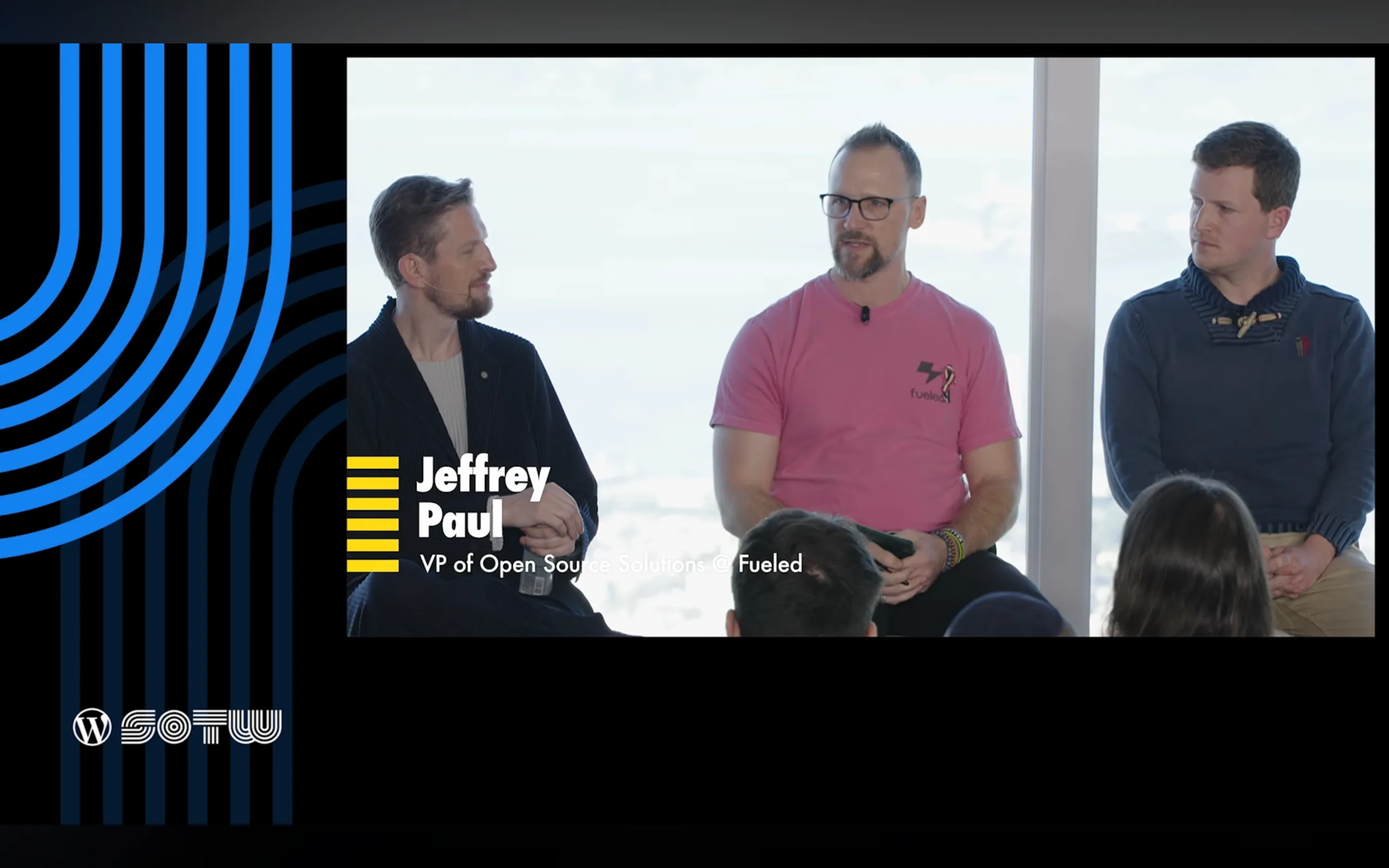
One of the highlights of my year was joining the AI panel hosted by Mary Hubbard, alongside Matt Mullenweg, Felix Arntz, and James LePage. Sitting on that panel, hearing how each of us approached AI from different angles, I realized we were not just discussing features. We were describing a shift in how people will build and maintain sites in the coming years.
This is where the “obvious and surprising things” came up. These were ideas I shared during the panel, because they reflect what I have seen across Fueled (and 10up) client work, ClassifAI development, and now the AI Experiments plugin.
The obvious things
These are the patterns everyone expected to see, and they are becoming mainstream faster than many predicted.
Chat-based search showing up as a natural extension of site discovery
Local and in-browser models that run privately, offline, and at very low cost
AI-driven brand visibility (aka “GEO” or Generative Engine Optimization)
Content distribution and translation workflows that used to require entire engineering teams now becoming almost trivial
These trends feel obvious only because the groundwork has been quietly laid for years.
The surprising things
The twist this year came from watching how people are starting to use the new Notes feature in WordPress 6.9.
I mentioned this on the panel because it caught me off guard when I saw it bubbling up within the community during the 6.9 release cycle. People are already experimenting with AI-driven content review inside Notes. Imagine WordPress calling out accessibility issues, shifts in tone, or sections where your writing reads differently than you intended. These are editorial tools that used to require specialized software. Now they are emerging directly inside WordPress.
That is when it hit me. The AI conversation in WordPress is no longer about novelty. It is about workflow, quality, and confidence.
A journey that started long before this State of the Word
For me, this work did not start with the AI Experiments plugin. It started in 2018 when the 10up team built the first version of ClassifAI for a client who needed content classification at scale. We open-sourced it in 2019 and kept evolving it as real publishers and agencies pushed its limits.
Those years shaped everything I know about AI inside WordPress. They taught me how AI fits into editorial workflows, when AI should require human review versus full automation, how permissions and provider selection affect trust, and how failure states must be designed with care. Those lessons are now embedded in the AI Experiments plugin.
ClassifAI will continue serving enterprise use cases with deep configurability. It will adopt the Abilities API, MCP adapter, and WP AI Client as those stabilize in the ecosystem.
The AI Experiments plugin takes a different path. It offers simple, approachable example AI experiments for non-technical users, while also serving as a reference for developers, agencies, and hosts who want to build AI powered features for their customers.
Each of these experiments helps us learn how people want to use AI inside their workflows, and which features could grow into stable tools inside core one day.
Looking ahead
This year’s State of the Word left me excited about something simple.
We are not racing toward AI.
We are shaping AI so it fits naturally into the way people already work in WordPress.
We are building an ecosystem where:
open tools remain the default (I’m specifically passionate about open source, local LLMs)
user choice stays central
and AI enhances creativity instead of replacing it
If you want to explore the AI Experiments plugin or get involved, you can follow everything in the open: https://github.com/WordPress/ai. And if you have ideas or want to push the boundaries of what is possible, I would love to hear them.