Category: Personal

Family life, career reflections, and personal essays — moments and lessons that don’t fit a specific topic.

  • Thoughts on “The Advantage” by Patrick Lencioni

    Thoughts on “The Advantage” by Patrick Lencioni

    In general I’m not a huge fan of business-related books as I tend to only find time for reading at the end of the day at which point my brain is done thinking about work and just wants to relax with something relatively mindless and not heavily thought-provoking.  That said, a group of colleagues at Fueled were tasked with reading The Advantage by Patrick Lencioni so like it or not my evening brain had work to do which means it was heavily biased to not like this book.  So I started reading this book biased towards thinking it would be worthless and annoying as just another business book in a long line of ones from folks pushing “expert advice” who assume their small sample size of experience could apply to the population of all our shared work experiences.  Tough crowd, I know.

    Somewhere along the way, though, the book managed to overcome at least some of that skepticism.  I still think Lencioni leans too heavily on anecdotes and makes some claims about “organizational health” that are difficult to substantiate or measure.  Even so, there are quite a few ideas here that I found immediately useful; namely that leadership teams need trust and productive conflict, clarity matters more than cleverness, making a decision is usually better than waiting for certainty, accountability needs to actually be visible, and important messages need to be repeated far more often than most leaders probably think is necessary.

    So this isn’t really intended as a book review or even a proper summary.  It’s closer to my annotated notebook from reading it, including the parts I agreed with, the parts I questioned, and the occasional part that made me roll my eyes.  What follows are the bits that I highlighted along the way and my thoughts on those passages.  My hope is that the process of reading, highlighting, notating, and sharing my thoughts here will impart some useful wisdom to long-term memory and benefit from one of these nuggets popping into my brain at some future moment.  :crossed-fingers:

    The Case for Organizational Health

    “A good way to recognize health is to look for the signs that indicate an organization has it. These include minimal politics and confusion, high degrees of morale and productivity, and very low turnover among good employees.” (page 26)

    I’ve worked in plenty organizations where this was definitely not the overall employee experience, unfortunately very few places where this was the norm.  If you find yourself in this sort of work environment, think long and hard before leaving.

    “Most leaders prefer to look for answers where the light is better, where they are more comfortable. And the light is certainly better in the measurable, objective, and data-driven world of organizational intelligence (the smart side of the equation) than it is in the messier, more unpredictable world of organizational health.

    Studying spreadsheets and Gantt charts and financial statements is relatively safe and predictable, which most executives prefer. That’s how they’ve been trained, and that’s where they’re comfortable. What they usually want to avoid at all costs are subjective conversations that can easily become emotional and awkward. And organizational health is certainly fraught with the potential for subjective and awkward conversations.

    That’s why so many leaders, even when they acknowledge the pain that politics and confusion are causing their organizations, continue to spend their time tweaking the dials in more traditional disciplines. Unfortunately, the opportunities for improvement and competitive advantage they find in those areas are incremental and fleeting at best.” (page 27)

    Pushing back on this a bit, because part of the reason “the messier, more unpredictable world of organizational health” and its “subjective and awkward conversations” is that you can’t readily measure change on something that’s subjective.  Best case scenario here is you’re polling your company on employee net promoter scores (or something similar) and theoretically link the changes in eNPS to organizational health even though changes that impact organizational health are at best correlated and not causal (barring folks providing text feedback in an eNPS and you can more clearly see causal evidence for improvement in scores).

    “The truth of the matter was that those companies weren’t smarter than their competitors; they simply tapped into the adequate intelligence they had and didn’t allow dysfunction, ego, and politics to get in the way.” (page 31)

    “The healthier an organization is, the more of its intelligence it is able to tap into and use. Most organizations exploit only a fraction of the knowledge, experience, and intellectual capital that is available to them. But the healthy ones tap into almost all of it. That, as much as anything else, is why they have such an advantage over their unhealthy competitors.” (page 32)

    Its not immediately clear what being “healthy” has to do with accessing and maximizing intelligence, knowledge, experience, or intellectual capital nor does the remainder of the book really answer that.  So I’m filing these sections under U for “unsubstantiated flourish“.

    “Another reason that organizational health has been overlooked by academia and the media has to do with the difficulty of measuring its impact. As I mentioned earlier, trying to identify exactly how much a company’s health affects its bottom line is next to impossible; there are just too many variables to isolate it from the myriad of other factors. But again, that doesn’t make the impact of organizational health any less real, just harder for journalists and academics to justify in a definitive, quantitative way.” (page 32)

    Ugh, ok so this validates my comment further up from earlier in the book.  Whether I like it or not, a mantra from my early career training at GE pops into my head: you can’t manage what you can’t measure.  So, ok, fine we want to try and improve things that we can’t measure actual improvement, but then let’s be more precise and say this is “how I think a company should be run because its what I think works” and not “organizational health.”

    “The financial cost of having an unhealthy organization is undeniable: wasted resources and time, decreased productivity, increased employee turnover, and customer attrition. The money an organization loses as a result of these problems, and the money it has to spend to recover from them, is staggering.” (page 33)

    Aha, ok, now we’re talking about stuff we can measure, fantastic!  I’d be fine with some sort of executive scorecard labeled “organizational health” that includes these items with whatever reasonable measures are in place to track their net change over time.  If you’re able to track that down into different parts of the organization where different changes are put into place, then great maybe we can start to talk about causal impact then.

    The Four Disciplines Model

    “In addition to being behaviorally cohesive, the leadership team of a healthy organization must be intellectually aligned and committed to the same answers to six simple but critical questions. There can be no daylight between leaders around these fundamental issues.” (page 36)

    I’ll help everyone out, because these don’t really come until Discipline 2’s section on “Create Clarity”.  Here are those six questions: why do we exist?  how do we behave?  what do we do?  how will we succeed?  what is most important now?  who must do what? The answers to those questions for the orgs playbook for purpose, values, business definition, strategy, immediate priority, and leadership responsibilities (respectively).

    “When it comes to reinforcing clarity, there is no such thing as too much communication.” (page 37)

    Agreed, over-communicate and you’ll maybe, slowly get the impression that people are listening to you.

    “When an organization’s leaders are cohesive, when they are unambiguously aligned around a common set of answers to a few critical questions, when they communicate those answers again and again and again, and when they put effective processes in place to reinforce those answers, they create an environment in which success is almost impossible to prevent.” (page 37)

    Feels straightforward; agree on some common topics, communicate them ad nauseam in a similar manner, rinse repeat.

    DISCIPLINE 1: Build a Cohesive Leadership Team

    “Advocacy is the kind of communication that most people are accustomed to, and it is all about stating your case or making your point. I think we should change our advertising approach. Or, I recommend that we cut costs.

    Inquiry is rarer and more important than advocacy. It happens when people ask questions to seek clarity about another person’s statement of advocacy. Why do you think the advertising approach is wrong? And which aspects of it are you referring to? Or, What evidence do you have that our expenses are too high? And how certain are you of this?“” (page 42)

    It used to drive me nuts and make me think that folks were lazy who asked questions back in leadership group conversations.  I can see now that some were purely curious and inquiring to learn other perspectives more deeply.

    “The kind of trust that is necessary to build a great team is what I call vulnerability-based trust. This is what happens when members get to a point where they are completely comfortable being transparent, honest, and naked with one another, where they say and genuinely mean things like “I screwed up,” “I need help,” “Your idea is better than mine,” “I wish I could learn to do that as well as you do,” and even, “I’m sorry.”” (page 48)

    I’d love this reference a lot more if it didn’t make use of the word “naked.”

    “In particular, we have them say where they were born, how many siblings they have, where they fall in the order of children, and finally, what the most interesting or difficult challenge was for them as a kid. Again, we’re not interested in their inner childhoods, just what was uniquely challenging for them growing up.” (page 49)

    “This inevitably leads to a newly found sense of respect because of the admiration that comes when someone realizes that one of their peers endured and overcame a hardship or accomplished something remarkable. More important, team members begin the process of getting comfortable with vulnerability when they realize that it is okay, even gratifying, to tell their peers something about themselves that they had never mentioned or been asked about before.” (page 49)

    “At the heart of the fundamental attribution error is the tendency of human beings to attribute the negative or frustrating behaviors of their colleagues to their intentions and personalities, while attributing their own negative or frustrating behaviors to environmental factors.” (page 53)

    Helping to get team members more vulnerable with one another is definitely useful, having more personal context for others on a team provides perspective when one might otherwise assume negative intent.

    “When there is trust, conflict becomes nothing but the pursuit of truth, an attempt to find the best possible answer.” (page 58)

    “One of the best ways for leaders to raise the level of healthy conflict on a team is by mining for conflict during meetings.” (page 64)

    “Another tool for increasing conflict is something I refer to as real-time permission. The idea here is that people need to get immediate feedback, the positive kind, when they start to try out this approach to conflict.” (page 64)

    I’ve tried to nudge that along in my team conversations after making a suggestion of my own to ask “ok now tell me why I’m an idiot and that’s a bad idea” which usually gets a few smirks but also occasionally some pushback that otherwise may have been held silent.

    “Great teams avoid the consensus trap by embracing a concept that Intel, the legendary microchip manufacturer, calls “disagree and commit.” Basically they believe that even when people can’t come to an agreement around an issue, they must still leave the room unambiguously committed to a common course of action. Most executives who hear about this disagree-and-commit philosophy are immediately convinced that it is something they want.” (page 66)

    “Disagree and commit” is also a concept in-use within the WordPress project and while its no fun being on the “disagree” end of this, having a group agreement that still finds a way forward is extremely helpful to keep things moving instead of stuck in analysis paralysis forever.

    “That’s because peer-to-peer accountability is the primary and most effective source of accountability on the leadership team of a healthy organization. Most people assume that the leader of an executive team should be the primary source of accountability—and that’s the norm in most unhealthy organizations—but it isn’t efficient or practical, and it makes little sense.

    When members of a team go to their leader whenever they see a peer deviate from a commitment that was made, they create a perfect environment for distraction and politics. Colleagues start to wonder who ratted them out, they get resentful of one another, and the team leader finds herself being constantly pulled into situations that could be more quickly and productively solved without her.

    When team members know that their colleagues are truly committed to something, they can confront one another about issues without fearing defensiveness or backlash. After all, they’re merely helping someone get back on track or seeking clarity about something that doesn’t seem right. And the person being questioned about her behavior or performance will be willing to admit that she has inadvertently lost her way—after all, she’s vulnerable—and adjust her behavior accordingly.” (page 71)

    “At its core, accountability is about having the courage to confront someone about their deficiencies and then to stand in the moment and deal with their reaction, which may not be pleasant.” (page 74)

    Surprisingly hard for adults to have an adult conversation, perhaps afraid of confrontation, but all would be easier in the end with more direct, radical candor.

    “The irony of all this is that the only way for a team to develop a true culture of peer-to-peer accountability is for the leader to demonstrate that she is willing to confront difficult situations and hold people accountable herself. That’s right. The leader of the team, though not the primary source of accountability, will always be the ultimate arbiter of it. If she is reluctant to play that role—if she is a wuss who constantly balks when it’s time to call someone on their behavior or performance—then the rest of the team is not going to do their part. This makes sense. Why would a team member want to confront a colleague about an issue when the team leader isn’t willing to and is probably going to let them off the hook anyway?

    So—and here is the irony—the more comfortable a leader is holding people on a team accountable, the less likely she is to be asked to do so. The less likely she is to confront people, the more she’ll be called on to do it by subordinates who aren’t willing to do her dirty work for her. I know this because I struggle with holding people accountable, and I am fully aware that the reluctance of my staff members to do so with one another is a simple function of my behavior. (I’m working on it.)” (page 73)

    “Many leaders who struggle with this (again, I’m one of them) will try to convince themselves that their reluctance is a product of their kindness; they just don’t want to make their employees feel bad. But an honest reassessment of their motivation will allow them to admit that they are the ones who don’t want to feel bad and that failing to hold someone accountable is ultimately an act of selfishness.” (page 75)

    Early in my career I worked for an exec who believed in “praise in public, correct in private” (or some such similar phrase), but the problem with that is that many folks never knew that corrections were being addressed privately and assumed that there was zero accountability.  So some initial correction can be helpful in public so others can see the accountability starting and then following up privately with more specifics and coaching guidance.

    “I’m often asked whether leaders should hold their people accountable privately during one-on-one sessions or in more public forums with the whole team, like during meetings. Although every case is a little different, generally I believe that on cohesive teams, accountability is best handled with the entire team. I say this because when leaders and team members call one another on issues in front of team members, they get benefits that don’t occur when it takes place individually.

    First, when accountability is handled during a meeting, every member of the team receives the message simultaneously and doesn’t have to make the same mistakes in order to learn the lesson of the person being held accountable. Second, they know that the leader is holding their colleague accountable, which avoids their wondering whether the boss is doing his job. Finally, it serves to reinforce the culture of accountability, which increases the likelihood that team members will do the same for one another. When leaders—and peers—limit their accountability discussions to private conversations, they leave people wondering whether those discussions are happening. This often leads to unproductive hallway conversations and conjecture about who knows what about whom.” (page 80)

    Aha, ok, yes I’m in total agreement here!

    DISCIPLINE 2: Create Clarity

    “Thinking they’re being mature, leaders often agree to disagree with one another around seemingly minor issues, thereby avoiding what they see as unnecessary contentiousness and conflict. After all, from their vantage point, the gaps in their opinions and decisions seem small and innocuous. What they don’t understand is that by failing to eliminate even those small gaps, they are leaving employees below them to fight bloody, unwinnable battles with their peers in other departments.” (page 91)

    This feels at contrast to the concept of “disagree and commit” which while popularized elsewhere is put into use within the WordPress project.  It can be painful when you’re on the disagreeing side to have to give in and commit to the larger will of the group, it at no worse keeps things moving along instead of grinding down progress such that nothing happens.

    “Plenty of euphemisms attest to this idea that implementation science is more important than decision science. One I heard years ago comes from the military: a plan is better than no plan. And it was General Patton who once said, “A good plan violently executed today is better than a perfect plan executed next week.” Those adages attest to something I’ve seen among too many leadership teams: a simple failure to achieve clarity because executives are waiting for perfection.” (page 94)

    “It’s just to say that waiting for clear confirmation that a decision is exactly right is a recipe for mediocrity and almost a guarantee of eventual failure. That’s because organizations learn by making decisions, even bad ones. By being decisive, leaders allow themselves to get clear, immediate data from their actions. As a result, they are often able to change course and defeat their indecisive competitors who, while congratulating themselves for not making a mistake, are too mired in theoretical analysis paralysis to rally around any clear plan.” (page 97)

    Ah yes, the ever-popular “perfect is the enemy of good“; I totally agree here.  Make a decision and move on.  If additional information comes up such that you need to adjust course again, then do so.  But analysis paralysis be gone!

    “When leaders who adopt too many values finally realize what they’ve done and that there is no hope for actually putting their many values to practical use, they often end up ignoring them altogether.” (page 109)

    My goodness, the effort to adopt “too many values” does not feel like I road I want to walk down.  Keep it simple, stupid!

    “Unlike a company’s reason for existing and core values, which never change, and the business definition, which changes fairly infrequently, an organization’s strategic anchors should change whenever its competitive landscape shifts and market conditions call for a different approach.” (page 129)

    Ok, sure, noted.

    “Many leadership teams struggle with not wanting to walk away from opportunities that seem basically good and easily justifiable outside the context of having a strategy, but which would distract the organization and pull it away from its stated intent. Strategic anchors give a leadership team the clarity and courage to overcome these distractions and stay on course.” (page 131)

    Come on folks, let’s keep our focus (plus hey who doesn’t like having less things to do anyway).  Do simple better.

    ““If everything is important, nothing is.”” (page 132)

    Put it on the quote board.

    “Regardless of how it is communicated within the larger organization, it’s worth repeating that every thematic goal must become the collective responsibility of the leadership team. This is true even if the goal doesn’t seem to directly involve the departments that some of those executives lead.” (page 136)

    “On a cohesive team, leaders are not there simply to represent the departments that they lead and manage but rather to solve problems that stand in the way of achieving success for the whole organization. That means they’ll readily offer up their departments’ resources when it serves the greater good of the team, and they’ll take an active interest in the thematic goal regardless of how closely related it is to their functional area. And while individual team members will certainly have expertise and responsibility in different parts of the business, they will not limit their input and participation to those areas alone.” (page 137)

    “The benefits of establishing an overarching thematic goal are enormous. Divisional rivalry and infighting become much less likely as leaders stop seeing their primary responsibility as solely running their own departments. Focus during meetings gets easier as unimportant and ancillary topics are guiltlessly cast aside. Paralysis around resource allocation can be broken due to clarity around what deserves the most energy and attention. And the need to referee political battles, not only at the executive level but deeper in the organization, diminishes greatly as people better understand the trade-offs that need to be made and the rationale for them.” (page 137)

    This really details a “team” environment, which can take some getting used to when one might otherwise just want to focus on their own division’s goals; however, keeping focused on the overall organizations goals and not just aligning to but working towards them best sets teams up for success.

    Defining objectives are the general categories of activity required to achieve the thematic goal. Like the thematic goal, defining objectives must be qualitative, temporary, and shared by the leadership team. They provide a level of specificity so that the thematic goal isn’t merely a slogan but rather a specific and understandable call to action. In most cases, there are between four and six defining objectives, depending on the nature of the goal itself.” (page 138)

    “Once teams identify their defining objectives, they have to take on the next, and last, step in the thematic goal process: identifying their standard operating objectives. These are the ongoing and relatively straightforward metrics and areas of responsibility that any leadership team must maintain in order to keep the organization afloat. I like to refer to these responsibilities as the “leaders’ day jobs.”” (page 140)

    “It’s important to note that sometimes a company’s thematic goal will be one of the items that appears on its standard operating list.” (page 141)

    “That’s not to say that most thematic goals come from the standard list, just that it is sometimes what is called for. And, of course, once the thematic goal has been achieved, the item goes back on the standard list.” (page 141)

    Ok, got it, I think.  In any case, noted for future reference.

    DISCIPLINE 3: Overcommunicate Clarity

    “I’ve heard claims that employees won’t believe what leaders are communicating to them until they’ve heard it seven times. Whether the real number is five, seven, or seventy-seven, the point is that people are skeptical about what they’re being told unless they hear it consistently over time.” (page 153)

    “The only way for people to embrace a message is to hear it over a period of time, in a variety of different situations, and preferably from different people.” (page 154)

    “Repetition is more than just a matter of communicating something again and again in the same way. Effective communication requires that key messages come from different sources and through various channels, using a variety of tools.” (page 155)

    Similarly I recall early on in parenting reading that you had to feed a kid something 15 times for them to “like” it, so repeating meals that my kids rejected time and time again felt like Sisyphus pushing Chef Boyardee meatballs up a hill of green beans.  In practice though, that repetition did help turn our kids into (knock on wood) non-picky eaters.  Seems the same is true repetition-wise in getting an organization to understand and act upon stated goals.

    “I remember the day that the woman who headed HR in Australia called her colleague in Germany to tell him about something her boss had just told her that was happening at corporate. Shocked, her German colleague said, “Hey, my boss just told me the same thing!” They felt a greater sense of alignment because of that one simple instance of consistent, informal messaging than they did after receiving any of the other more produced forms of communication.” (page 157)

    There are several “examples” in this book that sound absolutely fabricated, this being one of them.  I’d be more convinced on a topic without even partially fabricated examples and more in explaining the hows/whys/etc around it instead.  :eyeroll:

    “What I will say is that the reason most organizations fail to communicate to employees is not that they don’t know how to build an intranet site or write a blog or design a PowerPoint presentation, but that they don’t achieve clarity around key messages and stick with them. The world is full of organizations where employees feel uninformed and in the dark even though they have access to more glossy newsletters, interactive Web sites, and overly produced employee meetings than they need or want. What they don’t get is consistent, authentic, and relevant communication.” (page 161)

    Ok, we get it, repeat the message.  Repeat the message again.  Repeat the message until you’re certain people are tired of hearing you say the same damn thing over and over.  And then repeat the message some more.

    DISCIPLINE 4: Reinforce Clarity

    “The fact is that the best human systems are often the simplest and least sophisticated ones. Their primary purpose is not to avoid lawsuits or emulate what other companies are doing but rather to keep managers and employees focused on what the organization believes is important. That’s why a one-page, customized performance review form that managers embrace and take seriously is always better than a seven-page, sophisticated one designed by an organizational psychologist from the National Institute for Human Transformation and Bureaucracy (there is no such thing).” (page 167)

    My high school math teacher and wrestling coach, Glenn Hyman, had a phrase during wrestling practice that’s stuck with me: “do more of less.”  Which meant don’t try and learn every wrestling move so you could potentially surprise an opponent with something new or be able to counter every possible situation, but instead focus on a couple key items and practice them so much they become second nature.  So the “do more” is the heavy repetition and practice and the “of less” is not trying to learn everything but narrowing it down to a very small subset.  This worked great for me as a wrestler and is something I try and remind myself when I look around my office and house and see too many started projects and not as many finished projects.

    Also, see the reference a bit above of Joe Maddon’s “do simple better.”

    “Keeping a relatively strong performer who is not a cultural fit creates a variety of problems. Most important of all, it sends a loud and clear message to employees that the organization isn’t all that serious about what it says it believes. Tolerating behavior that flies in the face of core values inspires cynicism and becomes almost impossible to reverse over time. When leaders take the difficult step of letting a strong performer go because of a values mismatch, they not only send a powerful message about their commitment to their values, they also usually find that the performance of the remaining employees improves because they are no longer being stifled by the behavior of their former colleague.” (page 181)

    This is a bit of “your values show most during difficult times,” if you say something is a value then stand up and make the hard, adult, professional decision to back those values.  Anything less sows discord.

    Checklists for future reference

    The following sections are more for my future reference, but I’m sharing them here for others looking to try out the concepts from building an organization following Patrick Lencioni’s four disciplines model towards organizational health.

    Members of a leadership team can be confident that they’ve mastered this discipline when they can affirm the following statements:

    • The leadership team is small enough (three to ten people) to be effective.
    • Members of the team trust one another and can be genuinely vulnerable with each other.
    • Team members regularly engage in productive, unfiltered conflict around important issues.
    • The team leaves meetings with clear-cut, active, and specific agreements around decisions.
    • Team members hold one another accountable to commitments and behaviors.
    • Members of the leadership team are focused on team number one. They put the collective priorities and needs of the larger organization ahead of their own departments.” (page 87)

    Members of a leadership team can be confident that they’ve mastered this discipline when they can affirm the following statements:

    • Members of the leadership team know, agree on, and are passionate about the reason that the organization exists.
    • The leadership team has clarified and embraced a small, specific set of behavioral values.
    • Leaders are clear and aligned around a strategy that helps them define success and differentiate from competitors.
    • The leadership team has a clear, current goal around which they rally. They feel a collective sense of ownership for that goal.
    • Members of the leadership team understand one another’s roles and responsibilities. They are comfortable asking questions about one another’s work.
    • The elements of the organization’s clarity are concisely summarized and regularly referenced and reviewed by the leadership team.” (page 150)

    Members of a leadership team can be confident that they’ve mastered this discipline when they can affirm the following statements:

    • The leadership team has clearly communicated the six aspects of clarity to all employees.
    • Team members regularly remind the people in their departments about those aspects of clarity.
    • The team leaves meetings with clear and specific agreements about what to communicate to their employees, and they cascade those messages quickly after meetings.
    • Employees are able to accurately articulate the organization’s reason for existence, values, strategic anchors, and goals.” (page 163)

    Members of a leadership team can be confident that they’ve mastered this discipline when they can affirm the following statements:

    • The organization has a simple way to ensure that new hires are carefully selected based on the company’s values.
    • New people are brought into the organization by thoroughly teaching them about the six elements of clarity.
    • Managers throughout the organization have a simple, consistent, and nonbureaucratic system for setting goals and reviewing progress with employees. That system is customized around the elements of clarity.
    • Employees who don’t fit the values are managed out of the organization. Poor performers who do fit the values are given the coaching and assistance they need to succeed.
    • Compensation and reward systems are built around the values and goals of the organization.” (page 182)

    Members of a leadership team can be confident that they’ve mastered meetings when they can affirm the following statements:

    • Tactical and strategic discussions are addressed in separate meetings.
    • During tactical staff meetings, agendas are set only after the team has reviewed its progress against goals. Noncritical administrative topics are easily discarded.
    • During topical meetings, enough time is allocated to major issues to allow for clarification, debate, and resolution.
    • The team meets quarterly away from the office to review what is happening in the industry, in the organization, and on the team.” (page 199)

    My takeaways

    I started The Advantage expecting another business book full of tidy anecdotes and advice presented as more universally applicable than it probably is.  There’s still some of that here, and I remain skeptical of treating “organizational health” as a thing an organization can meaningfully improve without finding ways to measure whether those changes are actually working.  In the end, I highlighted considerably more than I expected.

    The ideas I’m most likely to carry forward are also the simplest ones: build enough trust that people can disagree honestly, ask questions before assuming intent, make decisions and adjust when new information arrives, hold one another accountable, keep the organization focused on a small number of important things, and communicate those things until you’re absolutely sick of hearing yourself say them.

    There’s a common thread through most of that which probably resonates with me more than Lencioni’s broader concept of organizational health: do simple better.  None of these ideas are especially complicated.  The hard part is consistently doing them, particularly when the conversations become uncomfortable or the easier option is to avoid them.

    So, somewhat annoyingly given the attitude I had when I started reading it, I’m glad I read the book.  I don’t buy every argument Lencioni makes, but there’s enough here that I expect a few of these ideas will pop back into my head when I need them.  Which, conveniently, was the whole point of writing all of this down in the first place.

    Fediverse Reactions
  • One benefit of visiting family on the east…

    One benefit of visiting family on the east…

    One benefit of visiting family on the east coast is retro sports finds, like this Orioles beach towel

  • Pomanders on Christmas

    Pomanders on Christmas

    I learned from a friend about pomanders and decided with the oranges in our stockings today to give it a try with some (fortunately) whole cloves we had in our spice drawer.  So far they already smell lovely and will be giving them a try drying out on our fireplace, but if they mold then will try the paper bag trick that Jake mentioned.  My family definitely gave me some sidelong glances while I was sitting quietly making these today, but it was honestly a nice relaxing, calming experience just slowing making designs in the oranges.  Highly recommended, 10/10.

  • Hiking thoughts

    Hiking thoughts

    In today’s edition of “Hiking with the kids” the trail talk trended towards palindromes.  New ones they identified today: bad dab, salad alas, back cab.  Not exactly highbrow commentary, but a solid hour long hike and chat nonetheless as an enjoyable vacation outing.

  • How I Work: from apps to index cards

    How I Work: from apps to index cards

    I’ve always appreciated seeing what gear, software, and workflows other folks use day-to-day.  It’s part inspiration, part curiosity, and sometimes a great way to discover that niche tool you didn’t know you needed.

    For years, Wes Bos’ /uses page has set the bar and the uses.tech site has turned this idea into a community catalog of developers, designers, and makers sharing their setups.  I’ve browsed more of those pages than I can count… and now, I’ve finally built one of my own.

    ???? Check out my /uses page here

    It’s a living list of what I rely on daily across:

    • Hardware (from desk to monitor to Oura ring)
    • Software and developer tools
    • My analog task system (3×5 cards > to-do apps)
    • Fitness and photo tools
    • WordPress plugins, themes, and host setups
    • Social platforms, backup strategies, and more

    I’ve also added some personal quirks, like how I stack-rank index cards each morning, what tools I’m still testing, and where I hang out online (ranked by actual usage).  It’s not just a list, it’s a snapshot of how I work and what keeps the machine running.

    As I tweak my setup, experiment with new tools, or shift platforms, I’ll keep the page updated.  If you’re into /uses pages, workflows, or just curious how other folks work, then I hope it’s useful.  And if you’ve got your own /uses page, I’d love to see it.  Drop me a link!

  • Why I Wrote a Personal README (and Why You Should Too)

    Why I Wrote a Personal README (and Why You Should Too)

    I value transparency, collaboration, and clarity whether that’s working with colleagues, contributors in the WordPress community, or clients.  But one thing has become clear over time: everyone works differently, and understanding those differences upfront makes for smoother, more effective collaboration.  Enter the Personal README.

    Inspired by Luc Levesque, Roy Rapoport, and 18F’s guide on Personal READMEs, I put together my own as a way to share how I work, communicate, and approach leadership.  It’s a snapshot of my work style, values, and expectations, both for myself and for those working with me.

    ???? Check it out here: jeffpaul.com/readme/

    Why Write a Personal README?

    A Personal README isn’t a set of hard rules, it’s a tool to set expectations, remove ambiguity, and help others understand how to best work with you.  It can cover things like:

    • Your working hours and communication preferences
    • Your approach to meetings and collaboration
    • What makes you excited (and what chafes you or makes you grumpy)
    • How you give and receive feedback

    By being upfront about these things, you can reduce friction and make it easier for colleagues to engage effectively.  It also helps new team members ramp up faster, since they don’t have to guess what works best.

    My Challenge to You

    If you haven’t written a Personal README yet, I highly encourage you to give it a shot!  Start with something simple and iterate over time.  Ask yourself:

    • What’s important to me in how I collaborate?
    • What do I expect from my teammates?
    • How do I like to communicate and make decisions?

    And if you do create one, share it!  Put it in your profile on social networks and communication platforms as well as your personal website (you own your own content right?!), basically wherever people can easily find it.  The more we normalize transparent communication, the easier it becomes to work effectively together.

    If you already have a Personal README, I’d love to see it!  Drop a link in the comments or tag me on Bluesky / Mastodon / LinkedIn or wherever we connect.

    Let’s make working together easier. ????

  • Chasing a 1989 Upper Deck Ken Griffey Jr. Rookie Card

    Chasing a 1989 Upper Deck Ken Griffey Jr. Rookie Card

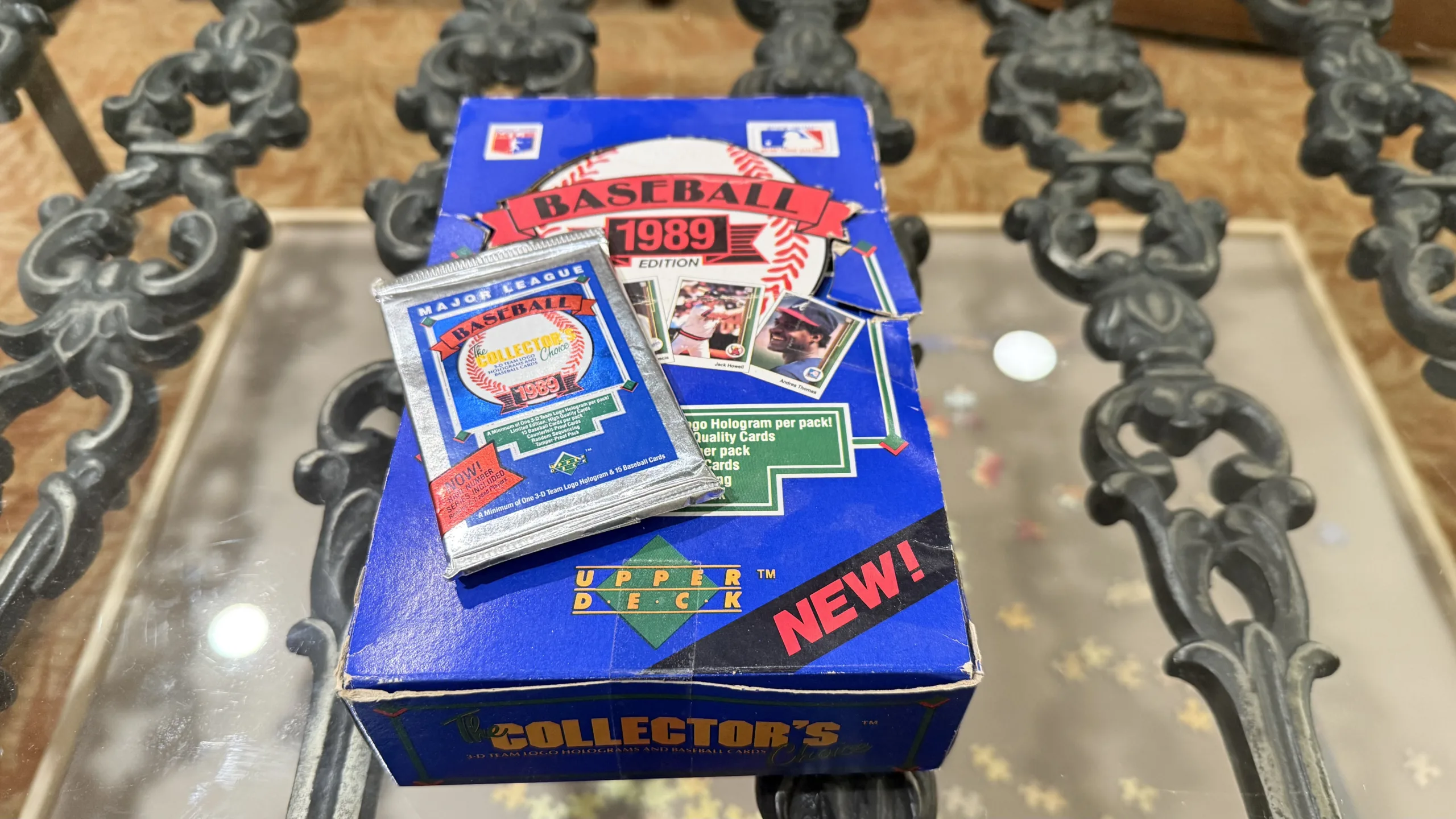
    It was the summer of 1989, I was in my pre-teen years and full bore in love with all things baseball.  Playing organized baseball, playing pickup baseball, wiffle ball home run derby, and of course buying and trading baseball cards.  Nerd alert.  The most coveted (and most expensive for someone my age) card that summer was the 1989 Upper Deck Ken Griffey Jr. rookie card.  None of my friends had one, but we were all chasing one.  Saving up money from cutting grass and doing other summer jobs just to buy a pack of Upper Deck cards.  Ripping packs in hopes of finding a Griffey rookie, but alas all for naught.

    Fast forward to the late 20-teens and my parents started ferrying from my childhood home to my current home the remains of my baseball card collection as well as what my dad had collected / stockpiled decades prior.  So many good memories of going to card shops and shows with my dad and friends, a much simpler time.

    Fast forward, again, to the summer of 2020, the first “Covid Summer”, and like others looking for ways to pass the time while cooped up at home I started to spend spare evenings digging into and starting to re-sort my old card collection.  Like many others of my generation in similar states, we found solace and joy in what was once a pre-teen affliction that now was a pandemic salve.  Card prices soared and what was once junk value cardboard was now valuable again.

    Fast forward, yes again, to this year and I decided for my birthday earlier this week that I was going to dig into my storage totes to “find some old school baseball cards to rip.”  Luck turns out that I had, or more likely my dad had stockpiled decades prior, a lightly scotch-taped box of 1989 Upper Deck baseball cards.  I knew immediately THAT BOX was calling to me and was how I was going to spend my birthday evening once the kids were in bed (with Crystal out of town for work).  What follows was the rough arc pack-by-pack of my evening ripping through 36 packs; come along with me for a stroll down a nerdy, cardboard-based, memory lane.

    Pack 1 – McLemore, Pecota

    A close up of cards

    The first pack starts out interesting with future Baltimore Orioles “supersub” Mark McLemore from his earlier years with the, then, California Angels.  I remember Mark’s short stint with the Orioles as an all-around, can-play-anywhere sort of a utility man ballplayer.  Bill Pecota on the other hand is more well-known for the fantasy baseball statistic named after him, PECOTA.

    Pack 3 – Gregg, McGwire

    A baseball cards with a baseball bat

    Another Star Rookie in this set, Gregg Jefferies, was also a very popular card to collect around this time but it was his 1988 Donruss rookie that was more sought after than this 1989 Upper Deck card.  Pair that with one half of the Bash Brothers, Mark McGwire, who back then was popular for his youth and power while setting the rookie home run record but wasn’t until years later in 1998 when he and Sammy Sosa (and Ken Griffey Jr. as well) lit baseball on fire with their single season home run record chase.  Unfortunately his career is tainted by alleged and confirmed steroid use and even with his immense stats did not make the Hall of Fame.

    Pack 3, Card 3 – Griffey

    A baseball card on top of a stack of packages

    And then, just like that, with card 3 in pack 3 the ever elusive Ken Griffey Jr. rookie card appeared.  Something I had chased as a pre-teen, but never managed to find was there in my hand.  If there was only one thing I could have changed about the moment was if my dad was there with me (and not back at his home in Pennsylvania) to share in the giant smile, quite chuckle, and general elation and glee at finally pulling the Griffey rookie.

    I debated stopping there and looking to sell the rest of the packs individually as they tend to go for decent money on eBay and could probably have earned enough money to cover funds to get the Griffey card graded (and then some).  But I figured it was still early, I had nothing else planned, and there were still 31 other packs staring back up at me.  The pre-teen Jeff would have been proud, and the Jeff of about an hour later would have been thankful as well (that’s called foreshadowing folks, so stick around ;).

    Pack 5 – Randy x2, Orel

    A group of cards with baseball players on them

    Pack 5 brought with it some serious pitching ability with Orel Hershiser, who might be one of the most decorated pitchers not (yet) to be in the Hall of Fame, and then TWO Randy Johnson rookie cards (love that pale blue Expos jersey).  The Randy cards are nice in that they fetch pretty decent money both raw and graded, so these might be good to sell as-is or get graded in hopes of PSA 9 or 10 to see for even better money.  I wasn’t chasing the Johnson star rookie, but it was nice to find and even better to find two of them to add to my tally of Hall of Famer cards.

    Pack 6 – Jim Pankovits

    A baseball card with a baseball player holding bats

    I don’t recall Jim Pankovits‘ playing career which makes sense as he spent it mostly with the Astros, but it turns out he also has a baseball player analysis system named after him, PANKOVITS.  However, what struck me when finding him in pack 6 was really the photo selection for this card.  It would seem that the photographer and someone at Upper Deck must have had beef with Jim as this is a pretty unflattering photo.  Still, he has a baseball player ranking system named after him and I don’t (and you probably don’t either).

    Pack 9 – Harold, Eck, Raf, Eddie, McGwire

    A group of cards with players in the background

    Another pack of stars from my youth, plus a bonus Orioles legend and personal favorite; pack 9 was another solid pack, maybe it’s a hot box with all sorts of hits?!  Harold Reynolds, who spent most of his time with the Seattle Mariners might be just as well known as a baseball broadcaster, but also had a short stint with the Orioles.  Dennis Eckersley and his mustache racked up tons of save, heavily with the Oakland A’s but with a scattering of teams during his Hall of Fame career.  Rafael Palmeiro was a prominent consistent and power hitter who spent many years with the Orioles, but who’s legacy is tainted by steroid allegation and positive test usage.  Eddie Murray may have spent the back part of his career with various teams, but spent the first half with the Orioles and was my favorite player as a kid (and still is to this day).  So many games spent watching from the upper deck and chanting “ED-DIE, ED-DIE” waiting for him to hit another homer run on his way to a Hall of Fame career; there are a plethora of others with stories just like this with other teams and players, just one of the joys growing up a baseball fan.  Oh, and then another Mark McGwire card, sweet.

    Pack 12 – Rock, McGwire, Big Cat

    A group of cards with baseball players on them

    Tim “Rock” Raines was an amazing leadoff batter who scored a ton of runs and stole a lot of bases on his way to the Hall of Fame, mostly with the Montreal Expos but also had a single season with the Orioles (perhaps a common theme here for cards I pulled and am sharing here all spent some time with the O’s).  No complaints next, another McGwire card.  Andrés “the Big Cat” Galarraga (“El Gato”) played for a smattering of teams but was a giant human (at least for those days) and had amazing reflexes as a first baseman given his size; thus El Gato.

    Pack 14 – Randy, Boggs

    A close up of cards

    Another pack, another Randy Johnson rookie, no complaints here.  Pair that with a Wade Boggs who spent the majority of his career with the Red Sox and some shameful time with the New York Yankees, never took it on his division rival Baltimore Orioles.  Boggs was also a super superstitious player, eating chicken before every game which means over the course of his career he had chicken no less than 2,439 times over the course of his 18 year career which works out to 135 times a year or about every third day.  That’s enough to make the Chicken Eater Hall of Fame let alone the Baseball Hall of Fame.

    Pack 17 – Orel, TJ, Kirby, Donnie Baseball

    A group of cards on a glass shelf

    Another Orel Hershisher followed by another player best known for something besides their playing career, Tommy John, and his famous ulnar collateral ligament (UCL) in his elbow and the surgery to replace it by Dr. Frank Jobe.  The surgery is so common now and is often referred to as Tommy John surgery or simply “TJ.”  It turns out John was actually quite the pitcher racking up 288 wins which is the second most by a pitcher since 1900 who’s not in the Hall of Fame.  Kirby Puckett was one of those players that even if you weren’t a Twins fan you had to like him for his general upbeat demeanor, charisma, and passion for playing baseball (and was least of the reasons he made the Hall of Fame).  Don Mattingly, more lovingly known as “Donnie Baseball”, played his entire career with the damn Yankees but was a player I had a hard time disliking as a kid though unfortunately for him my lack of disdain did nothing to help him make the Hall of Fame (or win a World Series) but has had his number retired by the Yankees.

    Pack 18 – Griffey, Randy, Darryl, Boggs

    A group of cards with players on them

    Another Griffey rookie, you’ve got to be kidding me, at this point I have a perma-smile and cannot believe my fortunate to have now pulled TWO of the same card that I’ve chased since childhood.  You probably could have dropped an anvil on my foot and I would have apologized for getting in the way.  True joy.  Add to that another Randy rookie, another Boggs, and a Darryl Strawberry team checklist card for the New York Mets.  Darryl may have struggled with substance abuse throughout his career, but he was an unbelievably imposing figure in the batting box and slugged innumerable home runs from the left side of the plate leading both the New York Mets and Yankees (twice) to World Series victories.

    Pack 20 – Donnie, Randy, Devereaux

    A group of cards with pictures of baseball players

    Another Donnie Baseball and Randy rookie, again no complaints here.  Mike Devereaux had decent power during his stint with the Orioles (two stints actually) and played the most games with the Orioles and are in the team’s Hall of Fame though did win a World Series while with the Atlanta Braves and is second in career home runs by a player born in Wyoming (only John Buck has more).

    Pack 21 – Gregg, Grace, Griffey, Von Hayes

    A group of cards with names

    Pack 21 started off just fine with another Gregg Jefferies and Chicago Cubs legend Mark Grace.  Grace and I share a fondness for the 17 jersey number, though he won a World Series while with the Arizona Diamondbacks beating the New York Yankees so should we ever meet I’m sure he’d hold that over my head.  From there my heart skipped when I came across the THIRD of the Griffey rookie cards from this box of 1989 Upper Deck baseball cards.  Had this happened to me as a child, setting aside how I came across an entire box of cards all to myself, I would have been insufferable and talked about it incessantly to anyone who would listen (and probably more who would rather not).  And I’d probably still be talking about it to this day.  The pack wrapped up with Von Hayes who bears a striking resemblance to a dear friend of mine, but otherwise was not a player I was generally aware of growing up.

    Pack 25 – Donnie, McGwire, Canseco

    A group of cards with a baseball player on them

    Another Donnie Baseball and Mark McGwire made this a fun pack, but toss in a Jose Canseco to pair with McGwire for a proper Bash Brothers pack made this an even cooler pack to rip.  Everyone I knew growing up that played baseball would do the Bash Brothers “high forearm” after home runs or other big plays, we grew up mimicking the fun and joy that Mark and Jose brought to the game.  Canseco might be one of the most decorated players (462 home runs, Rookie of the Year, 6x All Star, MVP, 2x World Series winner) to not make the Hall of Fame, but given his documented use of performance-enhancing drugs certainly kept him out of the Hall (and likely ensnared others and kept them out as well, see McGwire, Palmeiro from this post alone).

    Pack 27 – Luis, Viola, Donnie, Canseco, Boggs

    A group of baseball cards

    Luis De Los Santos had a mostly journeyman career including stints in Japan, Mexico, Korea, and Taiwan (where he won a Taiwan Series), but also had a partial season with the the Baltimore Orioles’ Triple-A affiliate, the Rochester Red Wings.  Frank Viola may not have made it to the Hall of Fame, but he did win a Cy Young in 1988 (which is celebrated on the back of this card) and was World Series MVP so that alone means he probably eats for free anywhere around Minnesota (where he primarily starred for the Twins).  Another Donnie Baseball and Wade Boggs and the “normal” Jose Canseco card (the former was his AL MVP card). 

    Pack 29 – McGwire x2, Schmidt

    A group of cards with baseball players

    Another pack with a Mark McGwire, strike that TWO McGwire’s and a Michael Jack Schmidt card.  More commonly known as Mike Schmidt, he for some reason sticks in my head as “Michael Jack Schmidt” almost certainly from watching Phillies games with my dad’s parents when visiting them during the baseball season and likely hearing the TV announcer refer to him that way.  Schmidt was a gritty third baseman who won 3x MVP’s, a World Series MVP, 12x All Star, and several other awards during his power hitting and defensive abilities-based career that saw him easily get elected to the Hall of Fame in his first year on the ballot.

    Pack 33 – Aase, Glenn, Donnie, Randy

    A group of cards with baseball players in gloves

    Don Aase played for a handful of teams but had one wonderful season with the Orioles in 1986 where he set the team record at the time for 34 saves, made the All Star team and closed out the game.  In a silver lining stat, his 34 saves were also at the time the record for a member of a last place team.  Welcome to being a lifelong suffering fan of the Baltimore Orioles, these are the things we celebrate.  Womp womp.  Glenn “Glass Jaw” Davis started his career showing serious power while with the Houston Astros and was traded to the Orioles after the 1990 season for Steve Finley, Pete Harnisch and Curt Schilling (this guy ended up amounting to a pretty decent pitcher) and then signed a then club record $3.275 million, one-year contract.  Orioles fans had a lot of excitement for Davis going into the 1991 season.  We should have known better.  Suffering a spinal accessory nerve injury during spring training he barely played that season.  1992 wasn’t much else to be excited about and then in 1993 he broke his jaw in a bar fight and was hit in the head by a line drive while in the dugout.  The Baseball Gods™ clearly did not want Glenn Davis to have a positively memorable career with the Orioles.  From there things got better pulling another Donnie Baseball and Randy rookie.

    Pack 36 – Randy, Griffey, Eck, Boggs, Donnie

    A group of baseball cards

    The final pack in the box, pack number 36, had things come down to an amazing finish.  Randy “Moose” Milligan spent his career with a handful of teams but mostly with the Orioles and is one of the few cards I have from my childhood that were hand-signed in-person.  Another Eck, Boggs, and Donnie Baseball group of cards and then a final, FOURTH, Griffey rookie.  An absolutely insane box of cards to open.  The pre-teen Jeff could never, NEVER, have imagined this sort of fortune and luck nor ever expected to own four Griffey rookie cards.  I probably could have asked for a kings ransom in trade had I merely tried to trade one of these as a kid, let alone four of them.

    A group of baseball cards

    I suppose I’ll likely try and grade all four of the Griffey cards and keep the best, my guess is perhaps one is a PSA 9 with the others more likely PSA 5s-7s.  The Randy rookies may also be worth grading given their current market prices of ~$100 for a PSA 10 though I’ll likely be more stringent with those as anything less than a PSA 10 will cost more to grade than I’d make selling it which almost certainly means I’ll just list for sale raw, as-is.

    A group of baseball cards and coins on a table

    The visual summary of my haul from a box of 1989 Upper Deck baseball cards; 4 Griffey rookies, 6 Randy rookies, 6 McGwire’s, and one lovely Eddie Murray card.  I could not have scripted a more enjoyable way to spend my birthday in a way that brings childhood wonder and joy to a (mumble mumble) 40+ year old.  Happy birthday to me indeed.

    A close up of a pack of baseball cards

    Postscript: One thing I noticed while opening the 36 packs, besides the enjoyable foil wrappers that partly fell apart, partly tore open much nicer than typical “wax packs” of that era, was the Mickey Mantle Card Contest that was advertised on the pack front and back.  Allegedly if you sent in a postcard with an accurate guess of the 1989 All Star game you had a chance to win a 1952 Mickey Mantle card “worth thousands of dollars” which, by the way, if that’s a 1952 Topps Mickey Mantle card is now worth over $6.6 million dollars.  I did a brief search online to see if I can learn more about this drawing and who won, but came up blank.  This is a pretty intriguing story and I’d like to know if someone did win the contest, which given the 5-3 final score seems like an entirely likely guess someone would have made.  I’d love to know which Mantle card they won and what happened to it since then.  If you have details about this contest, the winner, and the fate of that card please let me know; otherwise I’ll try and see if there’s a way to track down more about this story.  I suspect I’d easily trade these four Griffey rookies for winning a 1952 Topps Mickey Mantle back in 1989.  Though if you think I would have been insufferable talking about ripping 4 Griffey rookies there’s probably no extent to the size of my ego had I won a Mantle card back then.

  • Guitar Zero

    Guitar Zero

    Our eight year old proclaimed today that “is it me or does all the music have guitars?” He’s now saying he’s going to start a band without guitars (though apparently bass and ukulele’s are allowed) and with drums, piano, and horns.  He finally settled on calling his band “Guitar Zero” (as a play off the Guitar Hero video game) and I have to tell you I’m all in on this idea!

  • Reblog: The 6 Mistakes You’re Going to Make as a New Manager

    Reblog: The 6 Mistakes You’re Going to Make as a New Manager

    Reblog via Matheus Lima‘s Terrible Software:

    Moving from an Individual Contributor (IC) to a manager is a significant career step. This is especially true in the ever-evolving tech industry. This change brings new challenges and opportunities to learn.

    Reflecting on my first couple of years as an Engineering Manager, I realized that the lessons I learned are not unique to me; many new managers face similar experiences. That’s why I want to share these insights with you. My goal is to support and connect with other new managers who are going through this exciting yet demanding transition.

    ???? Delegation

    The most common trap you’ll probably fall into is the (many times, subconscious) reluctance to delegate. Transitioning from an IC to a manager, I found myself attached to old responsibilities, unable to trust my team with tasks I used to do.

    You’ll rationalize it, “they won’t be able to do it the same way I’d do it,” but even if this is true (it’s not), long-term thinking you want your team to be able to tackle the things you used to do. Otherwise, they won’t grow — and neither will you.

    Remember that delegation isn’t about randomly distributing tasks; it’s about empowering your team, trusting them, and stepping into your new role as a leader.

    ???? Where’s my dopamine?

    For over a decade, my dopamine (from work) came from a very predictable place: shipping new things. As a manager, those direct rewards will simply disappear, leaving you feeling unfulfilled for weeks (months in my case).

    I won’t lie; this isn’t a solved problem for me yet, but I think I got into a much better shape by (trying to) rewire my brain into getting satisfaction from other places: giving feedback, seeing my reports grow, writing a very thorough performance review, etc.

    Keep in mind that we’re not the stars anymore; we’re facilitators. Yes, it’s true that we don’t ship a project directly anymore, but we’re helping our team ship all projects.

    ???? Quality over quantity

    It’s easy for new managers to equate the growth of their team size with personal and professional success. In my early days, I found myself desiring more team members or even additional teams, believing it’d reflect my management skills — and, of course, lead to a salary raise.

    However, I soon learned that this was a mistake. True growth comes from the quality of your team’s output, not from the quantity of its members. Focus on pushing your team to the next level; create a place where they can come up with new ideas and do great work. This not only leads to higher quality work but also to a more cohesive and happier team. Remember, a smaller team that works well together can do better than a bigger team that doesn’t.

    ⚖️ The level of engagement

    The right amount of engagement that you should have in your team’s projects is also a tricky subject. Lean in too much, and you’re micromanaging; lean out too much, and you appear disengaged.

    To find the right balance, consider the concept of Guided Autonomy. This means setting clear goals and expectations, then stepping back and letting your team figure out how to achieve them. Your role becomes less about directing every action and more about providing guidance. This approach promotes responsibility and growth within your team while ensuring alignment with project objectives.

    In my journey, I’ve learned that effective engagement means being present without being overbearing. It’s about creating an environment where your team feels supported but also free to innovate and take ownership. The key is to offer guidance and support without taking away your team’s independence.

    ????️ Managing perception

    As an individual contributor (IC), your work spoke for itself; people could easily see it. Plain and simple. As a manager, it’s less black and white, and surprisingly, for many new managers, part of your job now involves managing how others see you.

    With your team members, it’s about making sure they understand and appreciate your role as a facilitator of their success. You’re no longer directly creating the product, but you play a crucial role in guiding the process, overcoming obstacles, and creating an environment where creativity and productivity thrive. It’s important for your team to recognize and value this shift in your contribution — from individual accomplishments to team successes.

    Externally, the challenge is different but equally important. Stakeholders, other departments, and senior management may not see the day-to-day impact you have on your team. Here, managing perception involves actively communicating your team’s achievements and how your leadership contributes to these successes. It’s not about taking credit for the work, but about highlighting your role in empowering your team to excel. It’s a delicate balance of showcasing the team’s work while making your leadership and its positive effects visible to those outside of your immediate group.

    I understand how controversial this can be, and it’s one of the reasons why ICs often hesitate to transition into management (“all that politics!”). But it is what it is, so it’s important to adapt. Perception management is about clarity and visibility, not just for your own benefit but also to accurately represent your team’s efforts.

    ???? Redefining success

    It’s quite common for ICs to have impostor syndrome, but for managers — especially new ones — this will reach a whole new level.

    You’ll often question your work or even if there’s any value in anything that you’re doing. I’ve been there, and from what I learned, success for you is as simple as asking yourself two questions:

    1. Is my team shipping?
    2. Are they happy?

    If the answer is “yes” to both, don’t worry; you’re crushing it. ????


    Every new manager makes mistakes, but each one is an opportunity to grow. Embrace these challenges as part of the learning process. Becoming a skilled manager takes time and continuous learning. Keep pushing forward, and soon, your mistakes will become milestones in your management career.

    I’d love to hear about your journey as a new manager. What challenges have you faced, and what lessons have you learned? Share your stories and insights below or contact me directly.

    So, for those just scanning, that breaks down to:

    1. Delegate Effectively: Assign tasks to team members, trust their capabilities, and focus on mentoring rather than doing everything yourself.
    2. Celebrate Team Success: Shift your sense of accomplishment to your team’s achievements and take pride in their growth and progress.
    3. Prioritize Quality: Aim to enhance the team’s output and collaboration rather than focusing on expanding the team size.
    4. Balance Involvement: Set clear goals and provide guidance while allowing the team autonomy in their execution.
    5. Communicate Contributions: Regularly share the team’s successes and your role in supporting them to ensure your impact is visible.
    6. Stay Adaptable: Approach new challenges with curiosity and a willingness to learn as you grow into your leadership role.

    This is such a perfectly wonderful TLDR for those moving into being a first time manager, but also a reminder for those who’ve been a manager perhaps even with multiple layers of an organization under you on six great actions to help position you as a leader that people will almost certainly WANT to work with!

  • Being a better ally and reflecting on yesterday’s actions

    Being a better ally and reflecting on yesterday’s actions

    TLDR; Yesterday I was insensitive towards Anne McCarthy and for that I deeply apologize and recognize the need to improve.

    As a person who belongs to a demographic that historically holds privilege, I’ve made it a personal commitment to advocate for empathy and support towards those whose experiences differ from mine.  In both my personal and professional lives, particularly within the open web community, I strive to exemplify allyship by fostering an inclusive and supportive environment.  It’s crucial that people like me call out behaviors that don’t align with these values, aiming to ensure that everyone feels welcome and valued in our community so that it can be a place where the principle of “welcoming contributions from anyone” is more than just a slogan but a lived reality that I want all to experience.

    Yesterday I failed to meet these expectations and, in doing so, created a negative experience for Anne McCarthy, who was facilitating the weekly devchat meeting for WordPress core.

    In the heat of the moment, I overlooked crucial contextual cues from Anne and others in devchat, reacting impulsively to a topic that struck a nerve with me. The specifics of what triggered my reaction are inconsequential compared to the impact my actions had on Anne.  Having served as a WordPress core Team Rep for over three years, I understand firsthand the challenges of managing an online forum and maintaining the collective focus during hour-long discussions.  I’ve witnessed how certain individuals can dominate conversations, stifling diverse viewpoints and limiting the exploration of other topics.  Yesterday I regrettably embodied the very behavior I wish to mitigate.  I must do better.

    I deeply admire and respect Anne’s incredible work with the Full Site Editing Outreach Program and their tireless efforts to enhance communication within the WordPress project and foster connections with the community. Anne’s dedication to inclusivity and collaboration serves as an inspiration to me and many others.  The impact of Anne’s work on the project and the broader open web community is immeasurable. I aim to be someone who not only supports such invaluable efforts but also works to amplify them.

    Anne deserves a sincere apology, and our community deserves leaders who are empathetic, supportive, and inclusive.  While I aspire to be one of those leaders, it’s evident that I have room for growth.

    Anne, I am genuinely sorry.